

Crinodendron hookerianum
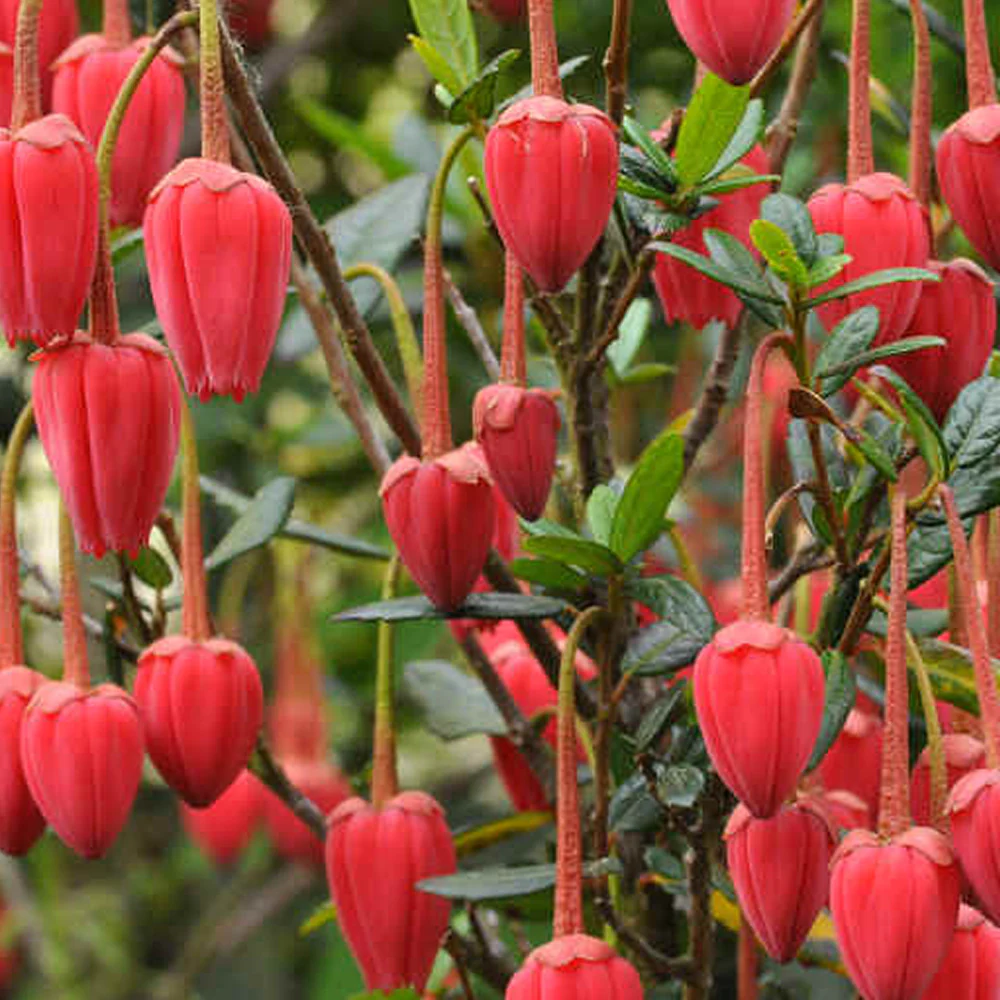
This plant has one of the more unusually-shaped blooms and they are spectacular. During the blooming season, at the end of red and green stalks form fleshy, cherry-red flowers of approximately 2.5 cm in length. These dazzling blooms are spread throughout the mass of the plant.
The “Lantern Tree” has lanceolate leaves, which are leathery-thick and narrow. The overall formation of the foliage of the plant is bushy and somewhat densely grouped. It can tolerate most temperatures in the UK down to about -10°C, although it does prefer to be sheltered in order to be protected from cold, dry winds.
It also prefers full sun to partially shaded areas that tend towards the sunnier side, but with the ability to keep its root system cooler and shaded. The plant thrives in more acidic soils and grows with a more-or-less upright and open habit.
They do very well in city border areas along walls and in protected gardens, like those in courtyards or city gardens
The pruning should be limited to dead branches and other dead areas. They are generally disease and pest free.
Product Information
Product Information
Shipping & Returns
Shipping & Returns
Description
This plant has one of the more unusually-shaped blooms and they are spectacular. During the blooming season, at the end of red and green stalks form fleshy, cherry-red flowers of approximately 2.5 cm in length. These dazzling blooms are spread throughout the mass of the plant.
The “Lantern Tree” has lanceolate leaves, which are leathery-thick and narrow. The overall formation of the foliage of the plant is bushy and somewhat densely grouped. It can tolerate most temperatures in the UK down to about -10°C, although it does prefer to be sheltered in order to be protected from cold, dry winds.
It also prefers full sun to partially shaded areas that tend towards the sunnier side, but with the ability to keep its root system cooler and shaded. The plant thrives in more acidic soils and grows with a more-or-less upright and open habit.
They do very well in city border areas along walls and in protected gardens, like those in courtyards or city gardens
The pruning should be limited to dead branches and other dead areas. They are generally disease and pest free.