
Physocarpus 'Burning Embers'
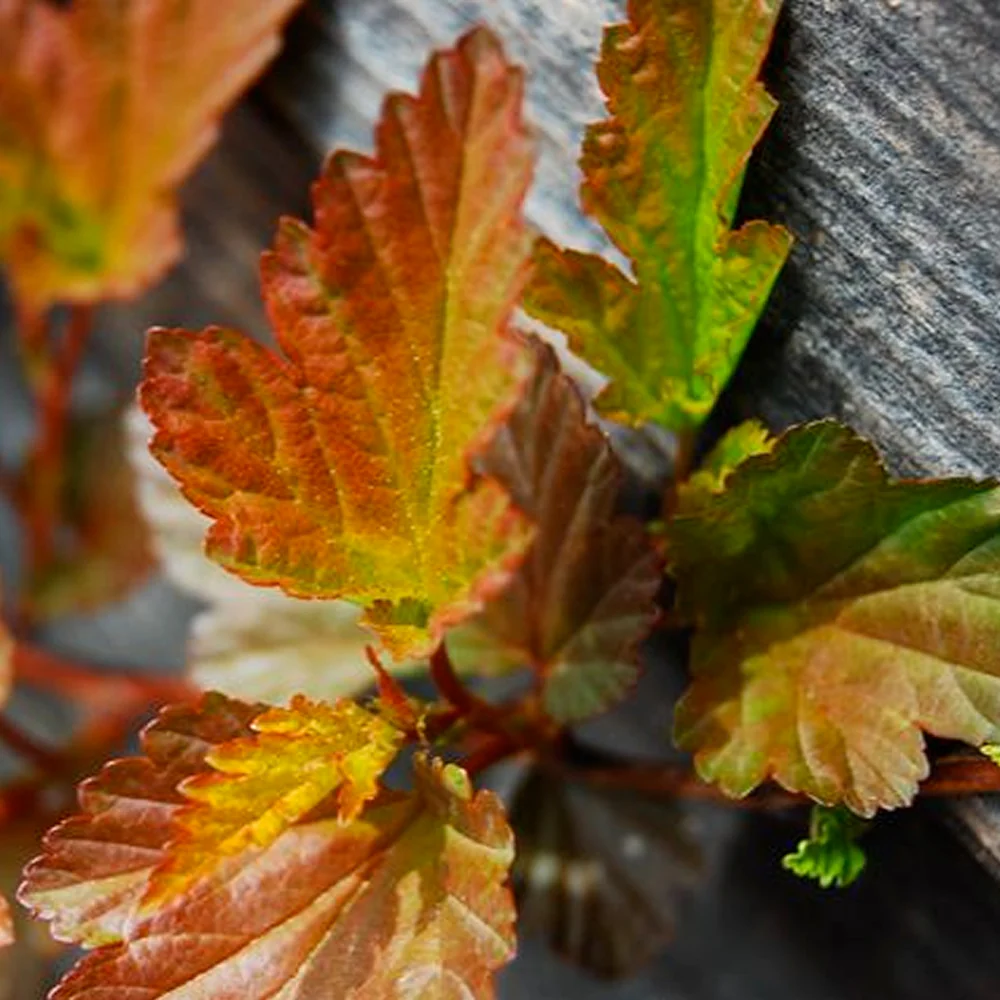
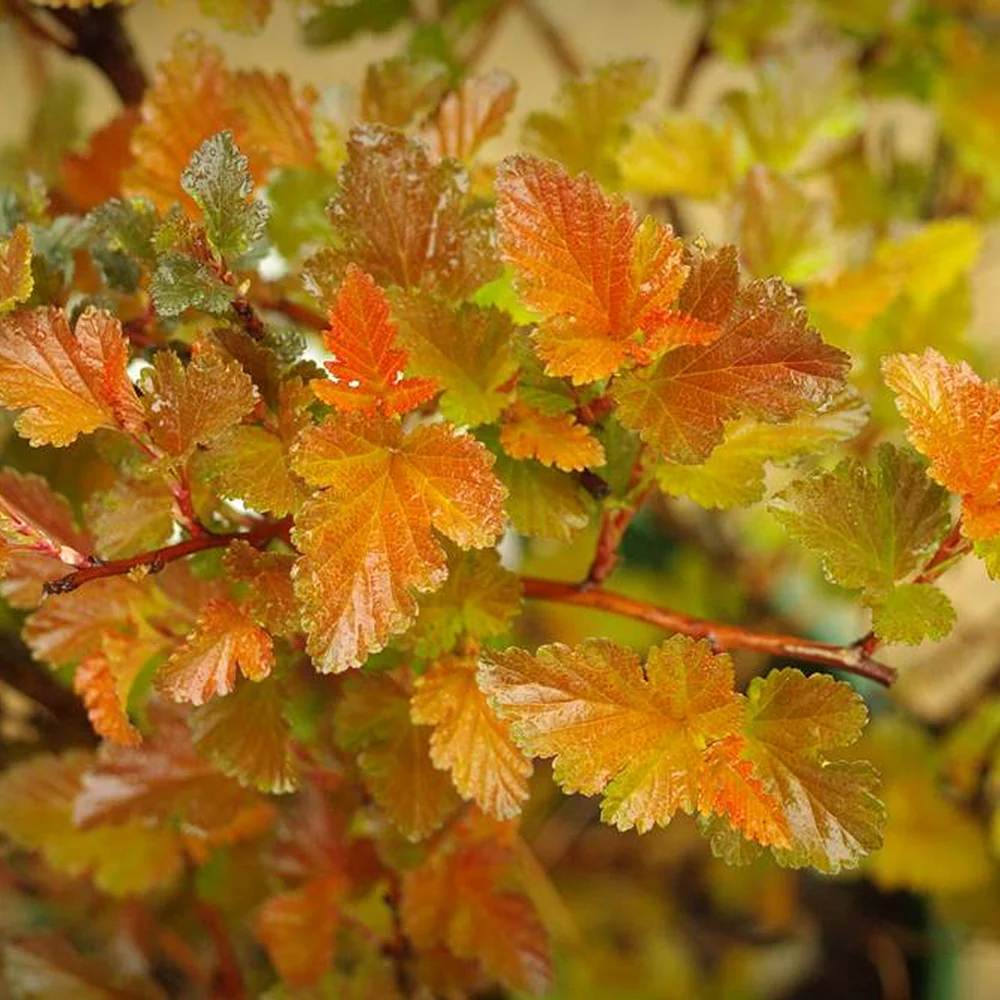
“Burning Embers” is a hardy, deciduous plant that ignites a fantastic colour scheme in the garden. The three-lobed, ovate leaves are fantastic colour additions to your garden and landscaping. While they tend to be maroon or a deep burgundy red throughout most of the growing season, new growth tends to include an array of greens, oranges and yellows.
White to pink flowers with reddish centres form on rounded corymbs in June and July. These flowers add a lovely pop of contrasting colour with the maroon leaves.
Although it is tolerant of most soil types, in chalkier or more alkaline soils the plant is apt to develop chlorosis, a bleaching of the leaves which will take away from its maroon colour. In addition, it tolerates full sun as well as partial shade.
As it is thicket-forming, pruning is suggested after flowering. If the plant becomes out of shape, stalks can be trimmed back to the base and reset with a total pruning down to about a foot in height above the ground.
Make this decorative Ninebark part of your informal woodland or cottage setting. Or put it to use as a border shrub or in the background of a flower bed.
Original: $14.00
-70%$14.00
$4.20Product Information
Product Information
Shipping & Returns
Shipping & Returns
Description
“Burning Embers” is a hardy, deciduous plant that ignites a fantastic colour scheme in the garden. The three-lobed, ovate leaves are fantastic colour additions to your garden and landscaping. While they tend to be maroon or a deep burgundy red throughout most of the growing season, new growth tends to include an array of greens, oranges and yellows.
White to pink flowers with reddish centres form on rounded corymbs in June and July. These flowers add a lovely pop of contrasting colour with the maroon leaves.
Although it is tolerant of most soil types, in chalkier or more alkaline soils the plant is apt to develop chlorosis, a bleaching of the leaves which will take away from its maroon colour. In addition, it tolerates full sun as well as partial shade.
As it is thicket-forming, pruning is suggested after flowering. If the plant becomes out of shape, stalks can be trimmed back to the base and reset with a total pruning down to about a foot in height above the ground.
Make this decorative Ninebark part of your informal woodland or cottage setting. Or put it to use as a border shrub or in the background of a flower bed.